
Overview
CONTINUING PROFESSIONAL DEVELOPMENT · ENGLAND AND WALES Diabetes Awareness Recognition, response and referral for practitioners already working in the field — not clinical management, just the judgement to notice, act within your role, and escalate. TEN MODULES · 20-QUESTION ASSESSMENT …

Course Details
Diabetes Awareness
Recognition, response and referral for practitioners already working in the field — not clinical management, just the judgement to notice, act within your role, and escalate.
PPT Deck
Audio Podcast
Audio Quiz
Infographic
Overview
Most diabetes training is written either for people with diabetes or for the specialists who manage it. This course is written for the large group in between: practitioners who meet people with diabetes constantly, who are often the first to notice that something is wrong, and who have no clinical remit to do anything about it beyond recognising it and acting.
The material is organised around what a non-specialist actually influences — noticing an undiagnosed presentation, responding correctly to a hypo, recognising DKA early enough to matter, not undermining someone’s self-management, escalating to the right person, and recording it so the next person knows. Where the content approaches clinical management, it stops and says so. Ten modules run from context and mechanism through to law, records and referral; two modules cover acute emergencies and carry a practitioner support note.
Who this course is for
It assumes you already work in the field. It does not assume any clinical training, any prior diabetes knowledge, or any authority to carry out clinical tasks.
Learning outcomes
By the end of the course, a learner will be able to:
State the scale accurately — quote current England and Wales figures with their source, and explain why the undiagnosed population matters to your caseload.
Explain the mechanism in plain language — describe what insulin does, what HbA1c measures, and the diagnostic thresholds used in England and Wales.
Distinguish the types — separate type 1, type 2, gestational and monogenic diabetes by cause, onset and risk, and recognise a misclassified diagnosis.
Spot undiagnosed diabetes — recall the 4Ts, recognise the slow adult picture, and distinguish routine referral from same-day urgency.
Respond to a hypo — recognise hypoglycaemia from behaviour as well as numbers, respond within the limits of your role and policy, and escalate without hesitating.
Recognise DKA and HHS — identify both hyperglycaemic emergencies, understand sick-day risk, and give a call handler the information they need.
Recognise the medicines and the technology — group the main drug classes by hypo risk, identify a CGM sensor, a pump and a closed loop system.
Support daily life without prescribing — help with eating, activity and routine, explain remission of type 2 accurately, and avoid damaging language.
Protect routine care — name the annual care processes, recognise a foot emergency, and take practical action about people who stop attending.
Apply the legal frame — explain Equality Act duties and DVLA obligations as they apply in England and Wales, and handle diabetes information properly.
Career path
Course structure
Diabetes in Context
What Diabetes Actually Is
The Types
Spotting Undiagnosed Diabetes
Hypoglycaemia
Hyperglycaemia, DKA and HHS
Treatment and Technology
Food, Activity, Weight and Remission
Complications and the Annual Review
Rights, Records and Referral
Apply and Reflect
Each module closes with an Apply and Reflect task. Modules 5 and 6 cover acute emergencies and open with a practitioner-support note.
Frequently asked questions
Q. Is this a qualification?
No. This is CPD. It is not on a national qualifications framework and does not confer a licence to practise.
Q. Does it authorise me to test blood glucose, or administer insulin or glucagon?
No. Those are delegated clinical tasks needing role-specific training and employer authorisation — this course teaches recognition, response and escalation only.
Q. Does it replace clinical diabetes training for registered clinicians?
No. It is pitched at awareness level for practitioners who meet people with diabetes but do not manage it clinically.
Q. How many CPD points or hours does it carry?
That is for the delivering provider to state; no point value is assigned in this pack.
Q. Is it accredited or endorsed?
Not by default. No accreditation, endorsement or certifying body is claimed anywhere in this pack.
Q. Which jurisdiction does it cover?
England and Wales. Scotland and Northern Ireland run different services, audits and, in places, different law.
Q. Will the figures still be right next year?
Some won’t — prevalence, cost, audit and DVLA guidance are all revised on their own cycles. Every figure carries a source and year.
Q. Can I use it for revalidation or a supervision portfolio?
You can record it as CPD activity and reflect on it. Whether your regulator accepts it as evidence is a question for them.
You May Like
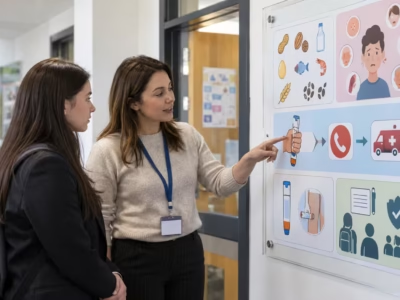
CPD COURSE Allergy Awareness Training Meeting the New 2026 School Requirements Jurisdiction: England and Wales · Content current to August 2026 CPD HOURS 35...

CPD COURSE · ENGLAND AND WALES Care Certificate Standards 16-standard knowledge bundle A knowledge refresher for practitioners already working in health and adult social...

CONTINUING PROFESSIONAL DEVELOPMENT · ENGLAND AND WALES Employability Skills with AI For practitioners who already support others into, through or between jobs — a...

CONTINUING PROFESSIONAL DEVELOPMENT · ENGLAND AND WALES Estate Agent Diploma A practitioner course in the law, duties and daily disciplines of residential estate agencies...

CONTINUING PROFESSIONAL DEVELOPMENT · ENGLAND AND WALES Residential Lettings Private rented sector practice under the Renters’ Rights Act 2025 and the Renting Homes (Wales)...
Course Features
- Lectures 12
- Quizzes 2
- Duration Lifetime access
- Skill level All levels
- Language English
- Students 2
- Certificate Yes
- Assessments Self
