
Overview
CPD COURSE · ENGLAND AND WALES · SEPTEMBER 2026 EDITION Drugs and Alcohol Awareness Training Ten modules for practitioners already working in health, social care, housing, education, criminal justice and community services. Built on the current law, ONS and OHID …

Course Details
Drugs and Alcohol Awareness Training
Ten modules for practitioners already working in health, social care, housing, education, criminal justice and community services. Built on the current law, ONS and OHID data published in 2025 and 2026, the 2024 naloxone regulations and the England and Wales treatment and safeguarding frameworks.
Overview
The course gives practitioners who are not substance-use specialists a current, sourced and jurisdiction-specific account of the substances people use, the harm they cause, the law that applies, how to recognise and talk about use, how to respond to an emergency, and how the treatment, mental health and safeguarding systems in England and Wales fit together. Every module ends by sending the learner back to their own setting with a task that tests the material against real practice.
It is written for England and Wales. Where the two differ (treatment commissioning and Area Planning Boards, DAN 24/7, minimum unit pricing, the Social Services and Well-being (Wales) Act duties, Working Together against the Wales Safeguarding Procedures) the material says so. Drug classification and driving law are UK-wide and are described as such. Scotland and Northern Ireland are not covered.
Who this course is for
Practitioners whose work brings them into contact with people who use drugs or alcohol, and who need to recognise, respond and refer without being specialists. Typical learners:
Learning outcomes
By the end of the course a learner will be able to:
Describe the main groups of substances, their principal effects and risks, the significance of route and poly-drug use, and use non-stigmatising terminology.
Explain the legal framework in England and Wales: drug classes and penalties, the Psychoactive Substances Act, alcohol licensing, drink and drug driving limits, employer duties, the Equality Act position on dependence, and information-sharing rules.
Calculate alcohol units, apply the UK Chief Medical Officers’ guidelines, recognise dependence and withdrawal risk, and deliver identification and brief advice using AUDIT-C and AUDIT.
Describe current trends including synthetic opioids, cocaine, ketamine and prescribed-medicine dependence, and act on local drug alerts.
Conduct a non-judgemental screening conversation, apply motivational interviewing principles, recognise red flags, and make a warm referral.
Recognise opioid overdose and alcohol poisoning, respond in line with their policy, describe the naloxone supply rules since December 2024, and explain harm-reduction services.
Describe how treatment is organised and funded in England and Wales, the evidence-based interventions available, and the meaning of recovery and recovery capital.
Apply the ‘no wrong door’ principle to co-occurring mental health needs, recognise suicide and psychosis risk at practitioner level, and use trauma-informed and Housing First approaches.
Recognise parental substance use and hidden harm, exploitation of children and adults, and follow the safeguarding pathways in England and in Wales.
Contribute to a lawful workplace drugs and alcohol policy, support a colleague appropriately, maintain professional boundaries and their own wellbeing, and keep their knowledge current.
Career path
The course does not by itself qualify anyone for a role. It supports progression into, or stronger performance in, roles where substance-use awareness is assessed.
| ROLE OR DIRECTION | HOW THE COURSE SUPPORTS IT |
|---|---|
| Substance-use recovery worker or keyworker | Whole course as a grounding; Modules 5, 6 and 7 most directly |
| Housing or homelessness support worker (complex needs) | Modules 2, 6, 8 and 9: premises law, harm reduction, co-occurring needs, cuckooing |
| Designated safeguarding lead or deputy | Module 9 and the England and Wales safeguarding frame |
| Lived-experience or peer recovery worker | Modules 5, 7 and 10: motivational approach, recovery capital, boundaries |
| Health and wellbeing or workplace HR lead | Modules 2, 3 and 10: law, brief intervention, policy and testing |
| Youth worker or school pastoral role | Modules 4, 5 and 9: trends, conversations with young people, exploitation |
| Probation, youth justice or police custody roles | Modules 2, 6 and 7: law and diversion, overdose response, treatment requirements |
Course structure
Ten modules. Each has an image-led opener, teaching slides, an Apply and Reflect task and one verified external resource. A 20-question multiple-choice knowledge check closes the course.
Substances, Effects and Terminology
The Legal Framework in England and Wales
Alcohol: Units, Guidelines and Harm
Drugs: Trends, Markets and Emerging Risks
Recognition, Screening and Conversations
Harm Reduction and Overdose Response
Treatment and Recovery Systems
Co-occurring Needs: Mental Health, Trauma and Housing
Children, Families and Safeguarding
Workplace Policy, Professional Practice and Wellbeing
Frequently asked questions
Q. Is this a licence to practise, a clinical qualification or an accredited safeguarding course?
No. It is continuing professional development. It does not qualify anyone to administer or supply naloxone, to give first aid, to assess or treat dependence, or to act as a designated safeguarding lead. The course supports those roles; it does not confer them.
Q. Does it carry CPD hours and is it accredited?
Yes. The course carries 15 CPD hours and is accredited by The CPD Standards Office. Professional bodies and employers decide how CPD is recorded against their own requirements.
Q. Does Module 6 count as naloxone training?
No. Module 6 teaches recognition of overdose and the legal and service context for naloxone. Kits are supplied with practical training by authorised services; the course tells learners where to get it.
Q. Does it cover Scotland or Northern Ireland?
No. Drug classification and the Misuse of Drugs Act are UK-wide, but treatment systems, alcohol policy, safeguarding law and naloxone arrangements differ. Modules 1, 3 and 5 apply anywhere; the system and law modules do not.
Q. Does the course teach harm reduction? Is that appropriate?
Yes, at the level set out in the English drug strategy, the Welsh delivery plan and OHID and Welsh Government guidance: keep people alive and connected. It contains no dosing or preparation information; those conversations belong to specialist services.
Q. How current is it?
Figures and statutory references were verified on 12 September 2026. ONS and OHID statistics are annual; the ketamine classification decision and the naloxone consultation outcome were pending; drug alerts change continuously. The course is re-checked before each delivery.
Q. Can learners with their own experience of substance use take it?
Yes. Each sensitive module opens with a practitioner-support note, and support routes are stated at the start and end. Learners are not asked to disclose anything.
Q. What if I disagree with a statement in the course?
Check the cited source first; then raise it with the trainer. The package is designed to be corrected. Where law or guidance is described as pending or under consultation, assume it may have moved.
Status of this course
This is continuing professional development. It is not a licence to practise, it is not a clinical qualification and it does not by itself satisfy any statutory or regulatory training requirement: naloxone administration, first aid, safeguarding and clinical assessment each have their own training standards. Sensitive material is pitched at recognition, response, escalation and referral; the course contains no dosing, preparation or clinical method.
You May Like
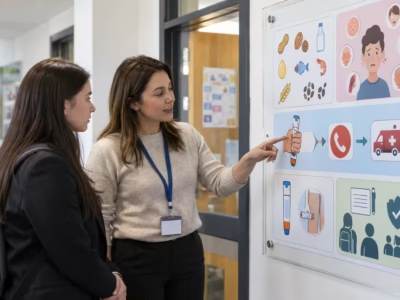
CPD COURSE Allergy Awareness Training Meeting the New 2026 School Requirements Jurisdiction: England and Wales · Content current to August 2026 CPD HOURS 35...

CPD COURSE · ENGLAND AND WALES Care Certificate Standards 16-standard knowledge bundle A knowledge refresher for practitioners already working in health and adult social...

CONTINUING PROFESSIONAL DEVELOPMENT · ENGLAND AND WALES Employability Skills with AI For practitioners who already support others into, through or between jobs — a...

CONTINUING PROFESSIONAL DEVELOPMENT · ENGLAND AND WALES Estate Agent Diploma A practitioner course in the law, duties and daily disciplines of residential estate agencies...

CONTINUING PROFESSIONAL DEVELOPMENT · ENGLAND AND WALES Residential Lettings Private rented sector practice under the Renters’ Rights Act 2025 and the Renting Homes (Wales)...

Course Features
- Lectures 12
- Quizzes 2
- Duration Lifetime access
- Skill level All levels
- Language English
- Students 2
- Certificate Yes
- Assessments Self
