
Overview
CPD COURSE · PRACTITIONER LEVEL · ENGLAND AND WALES Level 3 Customer Service Diploma Customers, communication, complaints, consumer law, vulnerability, measurement and improvement — for people already working in customer service. TWELVE MODULES · 20-QUESTION KNOWLEDGE CHECK · POSITION AS …

Course Details
Level 3 Customer Service Diploma
Customers, communication, complaints, consumer law, vulnerability, measurement and improvement — for people already working in customer service.
PPT Deck
Audio Podcast
Audio Quiz
Infographic
Overview
Customer service in England and Wales has changed materially since 2023. The FCA Consumer Duty raised the standard of support that regulated financial firms must provide; the Digital Markets, Competition and Consumers Act 2024 replaced the unfair-trading regulations in April 2025, banned fake reviews and drip pricing and gave the CMA the power to fine directly; the Data (Use and Access) Act 2025 created a statutory right to complain to organisations about data handling from June 2026; and the Crime and Policing Act 2026 created a standalone offence of assaulting a retail worker. At the same time national customer satisfaction has recovered from its 2024 low to 78.3 in July 2026, while hostility towards customer-facing staff has continued to rise.
This course brings a practitioner’s knowledge up to that position. It is organised around what a Level 3 specialist actually does: understand customers and their needs, communicate and build rapport on every channel, handle complaints and difficult conversations, apply consumer law and regulation, support customers in vulnerable circumstances, measure service and use the data, recover well when things go wrong, work with and coach colleagues, and plan their own development. It uses verified 2025-26 figures from the Institute of Customer Service, the FCA and the Financial Ombudsman Service throughout.
Who this course is for
Assumes at least a year in a customer-facing role. Not an introduction, and not a management qualification.
Customer service advisors, agents and administrators moving into senior, specialist or complaints roles
Complaints handlers, resolution and escalation teams, and quality or insight analysts
Team leaders and supervisors who coach frontline staff and want the underlying law and evidence
Staff in regulated sectors — financial services, telecoms, energy, water, housing, health and public services — who need the customer-facing view of their regulator’s expectations
Apprentices on the Customer Service Specialist standard who want a structured knowledge companion (not a substitute for their programme)
Learning outcomes
On completion a learner should be able to:
Explain what customer service means at specialist level, why it matters commercially and legally, and how national satisfaction is measured.
Distinguish needs, wants, expectations and experience; map a customer journey; and turn customer information into an evidence-based recommendation.
Apply structured listening, questioning, plain-English writing and accessible-communication standards across phone, email, chat, social and face-to-face channels.
Build rapport, recognise and respond to emotion, and manage their own emotional load in a customer-facing role.
Design and operate omnichannel service, including chatbot-to-human handover, accessibility and data protection duties.
Handle a complaint to a standard that would satisfy an ombudsman, know the relevant timescales, de-escalate, and recognise, respond to and report hostility and abuse.
Apply the Consumer Rights Act 2015, the DMCC Act 2024, the Equality Act 2010 and data protection law in England and Wales, and signpost the correct complaint route.
Recognise vulnerability, respond to disclosure using a structured protocol, record lawfully, and refer — including where a customer may be at risk.
Choose and interpret service metrics, avoid target-gaming, and run quality monitoring that colleagues trust.
Use root-cause and continuous-improvement tools, make strong recommendations for change, coach colleagues, and set a personal development and wellbeing plan.
Career path
Course structure
Customer Service in Context: What It Is and Why It Matters
Understanding Customers: Needs, Expectations and Insight
Communication: Listening, Questioning, Speaking and Writing
Rapport, Empathy and Managing Emotions — Theirs and Yours
Digital and Omnichannel Service
Complaints, Difficult Conversations and Hostility
Consumer Law and Regulation in England and Wales
Customers in Vulnerable Circumstances
Measuring Service: Metrics, Benchmarks and What to Do with Them
Service Recovery, Problem Solving and Continuous Improvement
Working with Others: Colleagues, Teams and Leading by Example
Professional Development, Wellbeing and Your Action Plan
Frequently asked questions
Q. Is this a qualification, a diploma or a licence to practise?
No. “Level 3” describes the pitch of the content — the level of the Customer Service Specialist apprenticeship standard — not a regulated qualification. Completing it does not confer a regulated qualification, an apprenticeship certificate or any licence, and it is not required to work in customer service.
Q. Is it accredited, and how many CPD points does it carry?
No accreditation or CPD point value is claimed in this package. Whether it counts towards a professional body’s CPD scheme depends on that body’s rules and on the provider’s arrangements.
Q. Does it map to the Level 3 Customer Service Specialist apprenticeship?
The content covers the knowledge areas of the ST0071 standard. It is not the apprenticeship, does not include the end-point assessment, and cannot substitute for the on-programme training and evidence an apprenticeship provider delivers.
Q. Is the content current?
It reflects the position in England and Wales as at September 2026, including the DMCC Act consumer provisions (April 2025), the Data (Use and Access) Act 2025 commencements and the Crime and Policing Act 2026. Several statistics are six-monthly or annual releases.
Q. Does it cover Scotland, Northern Ireland or other countries?
No. Much consumer law is UK-wide, but complaint bodies, safeguarding legislation, court procedure and some regulatory rules differ in Scotland and Northern Ireland, and other countries have their own regimes.
Q. Is it legal advice?
No. It is general training material. Decisions about a specific customer, complaint or incident must follow your organisation’s procedures and, where necessary, advice from a manager, compliance team or lawyer.
Q. Does it deal with abuse of staff and customers in crisis?
Yes, at recognition, response, escalation and referral level. Modules 6 and 8 are preceded by a practitioner note. The course does not teach physical intervention, investigation, clinical assessment or counselling.
Q. Who should not take it?
People new to customer service will find Modules 7 to 10 dense; an introductory course would be a better start. It is not designed for managers seeking leadership qualifications, nor for specialist regulated roles with their own mandatory training.
You May Like
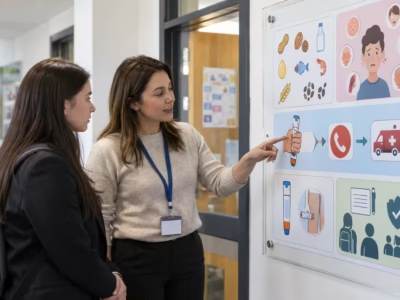
CPD COURSE Allergy Awareness Training Meeting the New 2026 School Requirements Jurisdiction: England and Wales · Content current to August 2026 CPD HOURS 35...

CPD COURSE · ENGLAND AND WALES Care Certificate Standards 16-standard knowledge bundle A knowledge refresher for practitioners already working in health and adult social...

CONTINUING PROFESSIONAL DEVELOPMENT · ENGLAND AND WALES Employability Skills with AI For practitioners who already support others into, through or between jobs — a...

CONTINUING PROFESSIONAL DEVELOPMENT · ENGLAND AND WALES Estate Agent Diploma A practitioner course in the law, duties and daily disciplines of residential estate agencies...

CONTINUING PROFESSIONAL DEVELOPMENT · ENGLAND AND WALES Residential Lettings Private rented sector practice under the Renters’ Rights Act 2025 and the Renting Homes (Wales)...

Course Features
- Lectures 14
- Quizzes 2
- Duration Lifetime access
- Skill level All levels
- Language English
- Students 2
- Certificate Yes
- Assessments Self
